Stop Building SOPs That Shouldn't Exist (The 50x Scalability Test)
Key Takeaways
- Most new SOPs are reactions to one-off mistakes, not patterns worth solving.
- The 50x test asks whether non-negotiables would break if usage scaled 50 times overnight.
- A weak rule set fails the test from below; an over-complicated rule set fails it from above.
- Don't write an SOP unless it ties to a clear business goal and a recurring risk.
- Protecting team time is a legitimate reason to refuse documentation.
Not every mistake deserves an SOP. The 50x scalability test asks one question — would the process still hold if usage grew 50 times overnight? — and uses the answer to filter out the documentation that exists only to make executives feel better. If a procedure fails the test, don't build it.
The Knee-Jerk Documentation Problem
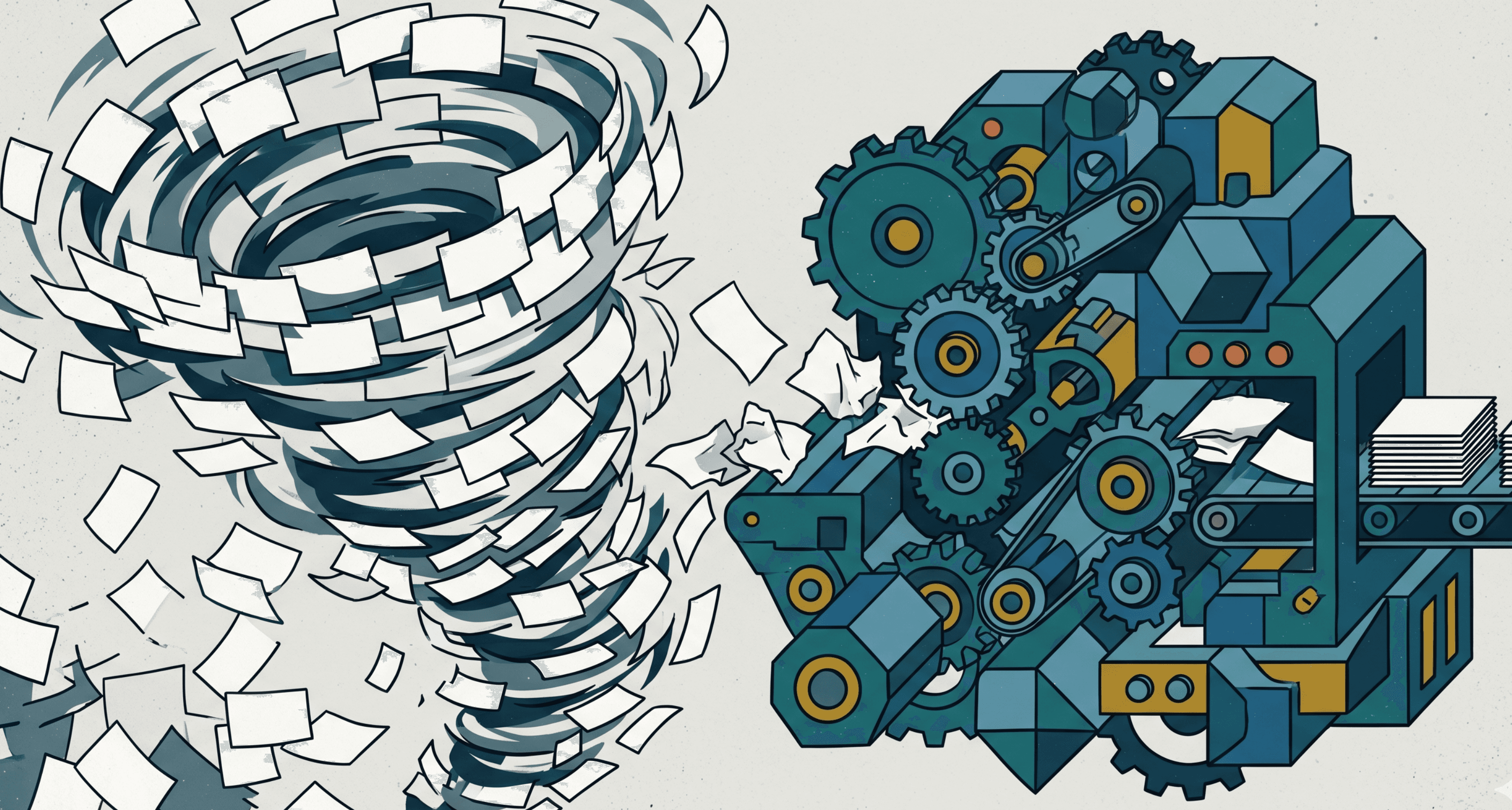
There's a dangerous instinct in modern operations: knee-jerk documentation. A new hire makes a careless mistake. Panic ensues. Management demands a wildly over-engineered SOP to ensure it never happens again.
Weeks of salary get burned drafting flowcharts. Meetings are held. You roll out a process that only applies to a fraction of a percent of actual work being done. This is exactly how companies slowly paralyse themselves with red tape.
How to Run the 50x Scalability Test
Before you build anything new, run the idea through the 50x scalability test. Ask the team: If the headcount using this process suddenly increased by 50 times tomorrow morning, would the core non-negotiables completely break?
The Two Ways a Process Fails the Test
- If the answer is yes because the rules are too weak, you don't have a reliable process.
- If the answer is yes because the rules are too complicated and manual to scale, you're building an administrative nightmare.
Either failure mode means the procedure isn't ready. One needs more rigour, the other needs ruthless simplification.
The Hard Questions to Ask First
Stop asking "How do we document this task?" Ask the harder questions first:
- Does this procedure tie to a crystal-clear business goal, or are we overreacting to a one-off?
- What exact risk does this solve? Is the risk actually likely to recur?
When Not to Build an SOP
If the proposed process fails the logic test, don't build it. Period. Protect your team's time and stay focused on systems that move the needle. Refusing to document something is sometimes the most useful thing a process owner can do.
Frequently Asked Questions
What is the 50x scalability test?
The 50x scalability test asks whether a process would still hold if the team using it grew 50 times overnight. If the non-negotiables would break under that scale, the process is either too weak or too complicated to be worth deploying.
When should you not write an SOP?
Don't write an SOP for one-off mistakes, low-risk tasks, or processes that don't tie to a clear business outcome. Documentation has a cost — every hour spent on an unnecessary procedure is an hour stolen from work that actually moves the business.
How do you avoid over-engineered processes?
Avoid over-engineered processes by tying every new SOP to a specific, recurring risk and a measurable business goal. If you can't name both, the procedure is probably an overreaction to a single incident rather than a real operational need.
Essoflo Team
The Essoflo team writes about operations, process design, and scaling teams without burning them out.